

Role of color theory in web design plays a crucial role in web design by guiding how we select and combine colors to create visually appealing, user-friendly sites that evoke the right emotions and drive actions. It helps ensure harmony, accessibility, and brand alignment. Let’s dive deeper into why this matters and how you can apply it effectively.
We at Suncode Miami have spent over a decade crafting innovative web projects, and we’ve seen firsthand how a solid understanding of color theory can elevate your online presence. Think about the last website that grabbed your attention right away. Chances are, the colors had a lot to do with it. They set the tone, guide your eyes, and even influence whether you stick around or click away. In this guide, we’ll break it down step by step so you can use these principles in your own projects.
Key Points / Quick Summary
• Color theory fundamentals include the color wheel, which shows relationships between primary, secondary, and tertiary colors.
• Different color schemes like monochromatic, analogous, and complementary help create balance and visual interest.
• Color psychology ties hues to emotions, making it essential for user engagement.
• In web design, colors impact accessibility, brand identity, and conversion rates.
What Is Color Theory and Why Does It Matter in Web Design?

Color theory is a scientific approach to color theory that explains how colors interact, mix, and influence perceptions. Known as color theory, it stems from principles developed centuries ago, but today every web designer needs to grasp it because color plays a key role in user experience. Here’s why: colors on the color wheel help us understand color harmony and create effective color combinations.
We start with the basics of color theory. The first color wheel came from Sir Isaac Newton in the 1600s, mapping out how light creates hues. Understanding the basics of color lets web designers build sites that feel intuitive and professional. For business owners, this means your site can play a crucial role in attracting clients and boosting form submissions. Next steps: let’s look at the fundamentals of color theory.
Lear More about Web Design Basics here.
The Fundamentals of Color Theory: What Every Designer Should Know

Principles of color theory begin with the color wheel, a tool that organizes hues to show their relationships. The basic color wheel includes primary colors like red, yellow, and blue. Mix them to get secondary colors such as orange, green, and purple. Then come tertiary options, blending primary and secondary for more variety.
Understanding color theory helps you describe a color by its hue (the base), saturation (intensity), and value (lightness). For example, add white to a color to make a tint or black for a shade. This RGB color system is key for digital work, as it defines how screens display tones. Color theory for web design relies on this to ensure consistency across devices.
Designers can use the color wheel to experiment with different color schemes. Play around with the color wheel, and you’ll see how opposite sides of the color wheel create contrast. Theory can help you create palettes that feel balanced. We’ve covered the basics of color here, but let’s move to specific schemes.
Learn about Dark Mode Web design!
How Do Different Color Schemes Work in Web Design?

Types of color schemes vary, but each serves a purpose in website design. A monochromatic color scheme uses variations of a base color, like tints and shades of blue, for a clean look. This monochromatic color makes sites feel cohesive and calm.
Analogous color schemes pick colors next to each other on the wheel, such as blue, blue-green, and green. They create harmonious color combinations that flow naturally. Complementary colors sit on opposite sides of the color wheel, like blue and orange, offering high contrast for accents.
To make a triadic color scheme, choose three evenly spaced hues, say red, yellow, and blue. This provides balance and vibrancy. Color schemes like these help in choosing the right color scheme. Website color schemes should align with your brand-experiment with different colors to find what works.
A color palette can help tie it all together. Used in website design, these schemes ensure effective color combinations. Right color combinations in web design make your site stand out. Using the correct color combinations keeps users engaged longer.
What Role Does Color Psychology Play in Web Design?
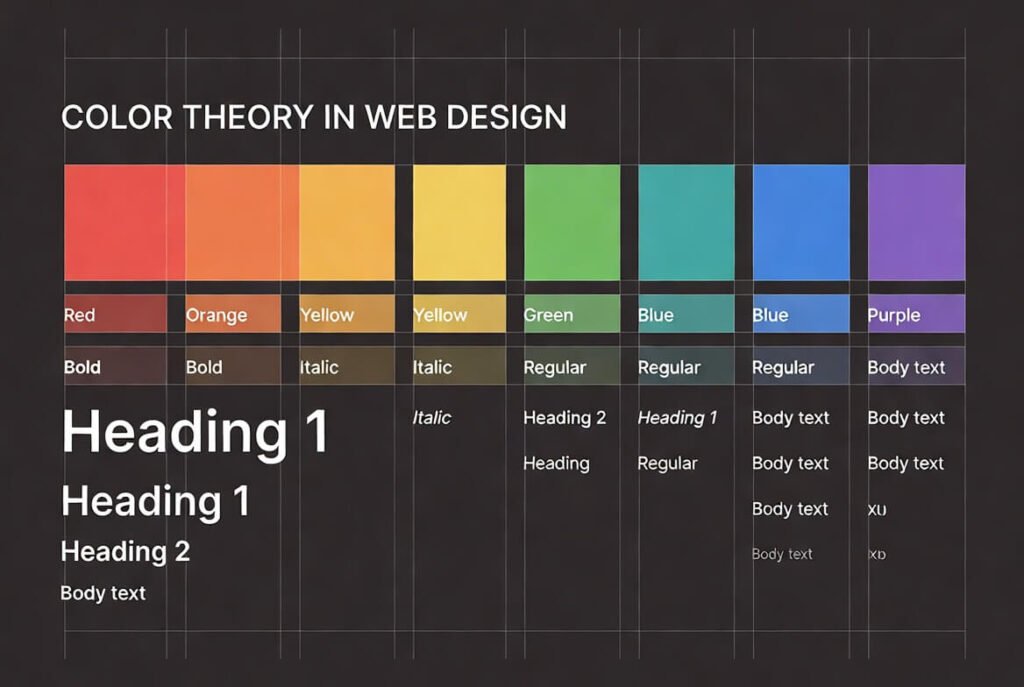
Color psychology explores how hues affect emotions and behaviors. Color theory and psychology go hand in hand, as certain tones evoke specific feelings. For instance, blue signals trust and calmness, ideal for professional services.
Red conveys energy and urgency, great for calls to action. Green suggests growth and nature, while yellow brings cheer and optimism. Black implies luxury and sophistication. Color meanings vary by culture, so consider your audience.
In web design, to create impact, we use color to create moods that align with business goals. Understand the importance of color here: it can boost conversions by making users feel comfortable. Color is a powerful tool, so choose wisely.
How to Choose the Right Color Palette for Your Website: Step-by-Step Guide

Choosing a color palette starts with your brand’s main color. Color theory can help by providing a framework. Here’s a step-by-step process:
1 – Identify your primary color based on brand identity.
2 – Use the color wheel to select secondary colors-maybe analogous for harmony or complementary for pop.
3 – Add accent colors for buttons and highlights.
4 – Test for color contrast to ensure readability.
5 – Create a color palette using tools like Adobe Color.
Applying color this way ensures effective color use. Website color choices should include background color options that don’t overwhelm. Choice of color impacts load times too-darker tones can feel modern. Use it to design sites that convert.
Designers can create visually appealing layouts by playing around with these elements. Various color combinations offer flexibility. Color scheme can make or break engagement.
What Are Common Mistakes to Avoid When Using Color in Web Design?
One big error is ignoring accessibility. Color contrast must meet standards so text is readable for everyone. Another is overusing bright hues- stick to 1-2% key phrase density in paragraphs, but for colors, balance is key.
Please keep in mind mobile views; colors shift on different screens. The right color helps, but test across devices. Effective color means harmony, not chaos.
How Can You Implement Color Theory to Boost Conversions?
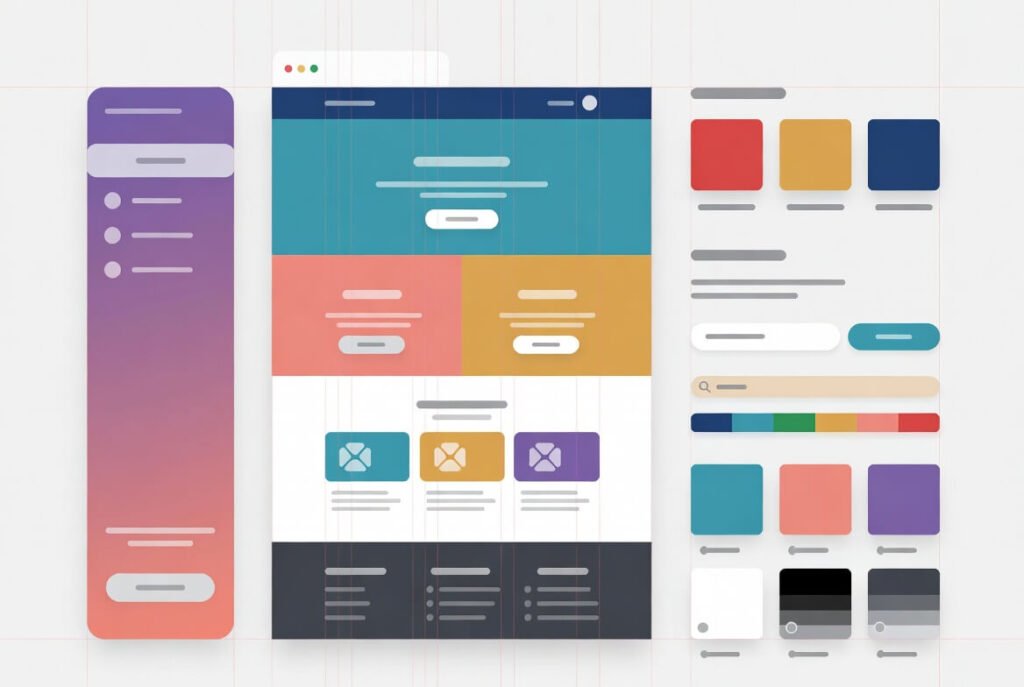
Color theory for the web helps funnel users toward actions like form submissions. Use accent color for buttons to draw eyes. Complementary color schemes create urgency.
We recommend starting with your audience in mind. Business professionals might prefer blues and grays. Color choices guide them down the funnel.
For more on web design strategies, check our post. It ties in perfectly with color application.
FAQ
What is the role of color theory in web design?
It guides selections for harmony, emotion, and usability, playing a crucial role in web design.
How do I choose the right color combinations?
Use the wheel for schemes like analogous or complementary. Experiment with different color to find balance.
Can color psychology improve my site’s performance?
Yes, right colors evoke trust and action, boosting conversions.
What tools help create palettes?
Adobe Color is great-use the color wheel there.
How often should I update my site’s colors?
Review yearly or with rebrands to keep it fresh.
We’ve woven in principles of color throughout. Color theory is a vast topic, but mastering it elevates designs. Ready to apply this? Contact us at Suncode Miami for tailored Web Design solutions.

