

The history of web design started with simple text pages and grew into dynamic experiences full of animation and interactivity. Tim Berners-Lee created the world wide web in 1989 at CERN, and the first website went live in 1991 as a basic hypertext project. We at Suncode Miami have spent more than 10 years building on this foundation, helping business owners turn those early ideas into modern websites that drive real results.
Here’s why this matters for you as an entrepreneur or professional: every stage in the evolution of web design brought new ways to connect with users. Animation made pages feel alive. Responsive layouts let sites work on any device. The result? Higher engagement, easier navigation, and stronger online presence that supports your marketing goals.
Key Points / Quick Summary
- The first website launched in 1991 as a plain text page created by Tim Berners-Lee.
- Early animation relied on GIFs before Adobe Flash brought video, sound, and movement to the web.
- Browsers like Netscape introduced better layout options and visual elements such as fonts and icons.
- HTML and CSS gave designers and developers flexibility and control over typography and navigation.
- Web 2.0 and MySpace popularized personalization and user-generated content.
- The first iPhone in 2007 pushed mobile-first thinking and responsive web design so sites could adjust and scale across desktop and smartphone screens.
- Today’s modern website uses JavaScript, micro-interactions, and flat design to improve user experience while keeping pages fast.
- Archie served as the first search engine, and the first banner ad appeared in 1994 to capture attention while browsing the web.
What sparked the early web and the first website?
The story begins with Tim Berners-Lee and his idea for a global hypertext system. In 1989 he proposed the project while working at CERN. The first web page went live on August 6, 1991, and it was simply text with links. No images, no colors, no animation-just information anyone could reach. This created by Tim Berners-Lee page marked the birth of the World Wide Web and showed how hypertext markup language could connect documents.
We see this as the foundation of everything we do today. Early internet users needed a simple way to share research. That basic interface taught us that good website design starts with clear content before adding visual elements.
How did the first search engine and browsing the web begin?
Before the web became visual, Archie appeared in 1990 as the first search engine. It helped internet users find files on FTP servers. Once the World Wide Web arrived, browsing the web felt different. People clicked through plain pages using early browsers. The first search engine on the web itself followed soon after with ALIWEB in 1993.
These steps made information accessible. For business owners, they highlight why clear navigation still matters. We always recommend strong menu structures so visitors find what they need in one click.
Learn about History of Web Design
When did animation enter the picture with GIFs and Flash?
Animation changed everything once GIFs arrived. These small looping images added the first movement to static pages. Then Adobe Flash took over in 1996. Designers used Adobe Flash to create full sites with video, sound, and interactive elements. Flash let web designers build entire experiences that felt like games or movies.
We remember the excitement of that era. Flash revolutionized web design by letting pages respond when users clicked or hovered. Yet it required plugins, which later caused issues. Still, those early animation efforts taught us how movement keeps visitors engaged. You can see the influence today in subtle hover effects and loading indicators.
What role did Netscape and early browsers play in layout and visual elements?
Netscape arrived in 1994 and quickly became the leading browser. It supported new tags for backgrounds, tables, and fonts. Web designers suddenly had tools for better layout. Tables organized content, while spacer GIFs held everything in place. Visual elements like icons and typography started to appear.
Browsers shaped how pages looked. Netscape pushed innovation during the browser wars, and soon JavaScript added interactivity. Menus could drop down, and navigation felt smoother. We still apply these lessons when we plan user interface elements for clients-clean fonts, logical menus, and layouts that guide the eye.
Click here to learn more about Flat Design vs Material Design.
How did the browser wars lead to HTML and CSS advancements?
The competition between Netscape and Internet Explorer brought real progress. HTML grew with new tags, and Cascading Style Sheets arrived in 1996. HTML and CSS separated content from presentation. Designers gained flexibility and control. No more messy table layouts for every page.
This shift improved accessibility and speed. Web page code became cleaner. We use HTML and CSS every day at Suncode Miami because they deliver consistent results across devices. The combination also laid the groundwork for modern animation without plugins.
Why did web design become more dynamic in the Web 2.0 era with MySpace?
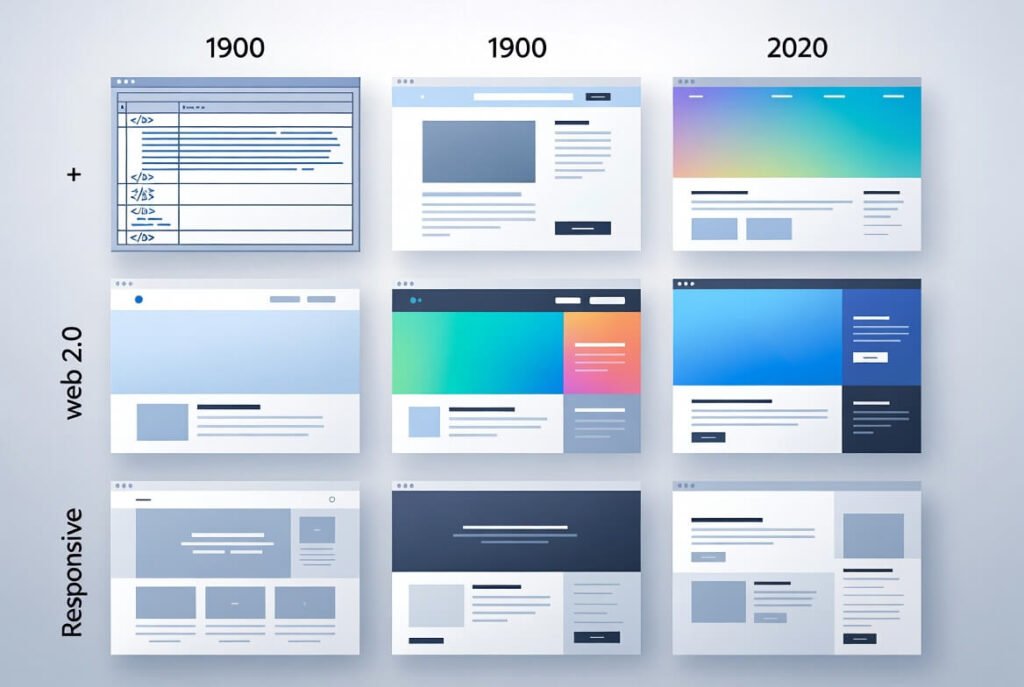
Around 2004 MySpace showed what happened when users could customize pages. Web 2.0 brought personalization. People added glitter graphics, custom layouts, and interactive features. Content management systems like early WordPress let anyone publish without deep coding.
Web design became more social. Landing pages turned into personal spaces. This era proved that user experience improves when visitors feel ownership. We apply the same idea today by building sites with easy updates and tailored content.
What changed with the first banner ad and advertising on the web?
The first banner ad appeared in 1994 on HotWired for AT&T. It was simple but effective – 44 percent of viewers clicked it. Suddenly web banner ads became common. They added visual elements and drove early monetization.
Businesses learned that placement and animation in ads capture attention. The first web banner ad opened doors for today’s targeted campaigns. We help clients use similar principles on modern landing pages without overwhelming users.
How did the first iPhone push responsive design and mobile-first approaches?
The first iPhone launched in 2007 and changed mobile internet usage forever. Suddenly people browsed the web on small screens. Responsive design became essential so sites could adjust and scale. Mobile-first thinking put smartphone users first, then expanded to desktop.
Flat design emerged around the same time to keep interfaces clean and fast. Web design has changed because of this. Responsive web design now ensures every page works perfectly no matter the device. We always start projects with mobile in mind to deliver the best user experience.
Learn more about Responsive Web Design: An Introduction & Best Practices
In what ways has modern web design incorporated animation through JavaScript and micro-interactions?
Today JavaScript powers smooth animation without plugins. Micro-interactions give instant feedback when users click a button or hover an icon. These small touches improve user interface and make sites feel alive. Flat design keeps everything lightweight so pages load quickly.
Web design has evolved into something that feels personal and responsive. Designers and developers now combine HTML, CSS, and JavaScript for experiences that adapt to each visitor. The current web focuses on personalization and speed. We see this every day when we create modern website projects that convert better.
Step-by-step: How the evolution of web design happened from static to today’s dynamic sites
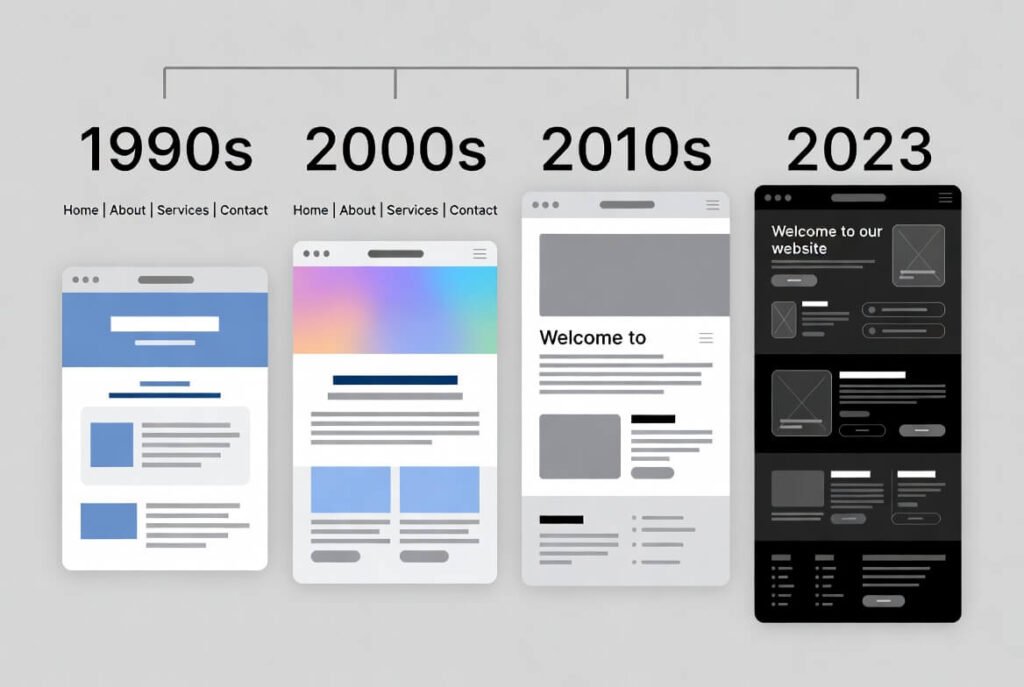
Here’s how we break down the process that web designers followed over the decades:
- Static phase (1991–1995) – Plain HTML pages with basic hypertext. Layout was limited to text and links. No animation yet.
- Visual and GIF era (1995–1996) – GIFs added movement. Early browsers supported images and simple icons.
- Flash and multimedia boom (1996–2005) – Adobe Flash brought full animation, sound, and interactive menus. Web design became more creative but plugin-heavy.
- CSS and standards period (1996–2010) – Cascading style sheets provided flexibility and control. Tables gave way to semantic coding.
- Web 2.0 and social growth (2004–2007) – MySpace and blogging introduced personalization and content management systems.
- Mobile and responsive shift (2007–2012) — The first iPhone forced responsive design. Sites learned to adjust and scale across devices.
- Modern interactive stage (2012–today) — JavaScript, micro-interactions, and flat design deliver fast, engaging experiences. Animation now improves user experience without slowing pages.
Each step built on the last. We follow a similar process today when we plan a project—start simple, add visual elements only where they help, and test on every device.
FAQ
What is the history of web design in simple terms? It traces how the World Wide Web moved from text-only pages in 1991 to today’s animated, responsive experiences. Key technologies like HTML, CSS, and Flash drove the changes.
How important was Adobe Flash to early animation? Flash was huge. It let designers add video, sound, and movement long before modern browsers supported it natively. Many classic sites relied on Flash until mobile devices ended its dominance.
Why does responsive design matter for business owners? It ensures your site works on smartphones and desktops alike. With mobile internet usage growing, responsive web design keeps visitors happy and improves search engine rankings.
When did micro-interactions become part of modern web design? They gained popularity after 2010 as JavaScript improved. These small animations give feedback and make interfaces feel intuitive.
How can understanding this evolution help my marketing? You see what works: clean navigation, fast loading, and engaging animation. We apply these lessons to create websites that turn visitors into customers.
What role does content management play today? Modern content management systems let you update pages without coding. This keeps your site fresh and aligned with your business goals.
Will animation continue to shape the future of web design? Absolutely. New tools make animation lighter and more powerful. We stay current so your site feels innovative yet easy to use.
The digital landscape keeps moving forward, and web design has come a long way. Design has come a long way from those first static pages. Web design evolved through careful steps that still guide us.
At Suncode Miami we use this full history of web design to build sites that perform. Whether you need a new landing page or a complete redesign, our team combines classic principles with current best practices.
If you want practical steps to begin, check our post on web development where to start.
Ready to bring these ideas to your business? We help entrepreneurs and professionals create websites that convert. Reach out through our contact form and let’s discuss how we can elevate your online presence with smart web design and marketing services.

